Big feelings come in small bodies. A tumble, a "no," a change of plans — and suddenly a three-year-old is completely underwater. In those moments a young child cannot think their way calm; they need something simple to do with their body while the wave passes.

That is exactly what these cards are for. Each one gives your little one a gentle, concrete action — a breath to take, a hug to give themselves, a rainbow to trace. Practice them when everyone is already calm, and they become a familiar friend for the hard moments. They are free, teacher-created, and made to print and keep close.

Free printable calm-down cards

Five gentle tools, each a free PDF. Print them, hang them at your child’s eye level, and pick a favorite to practice together.

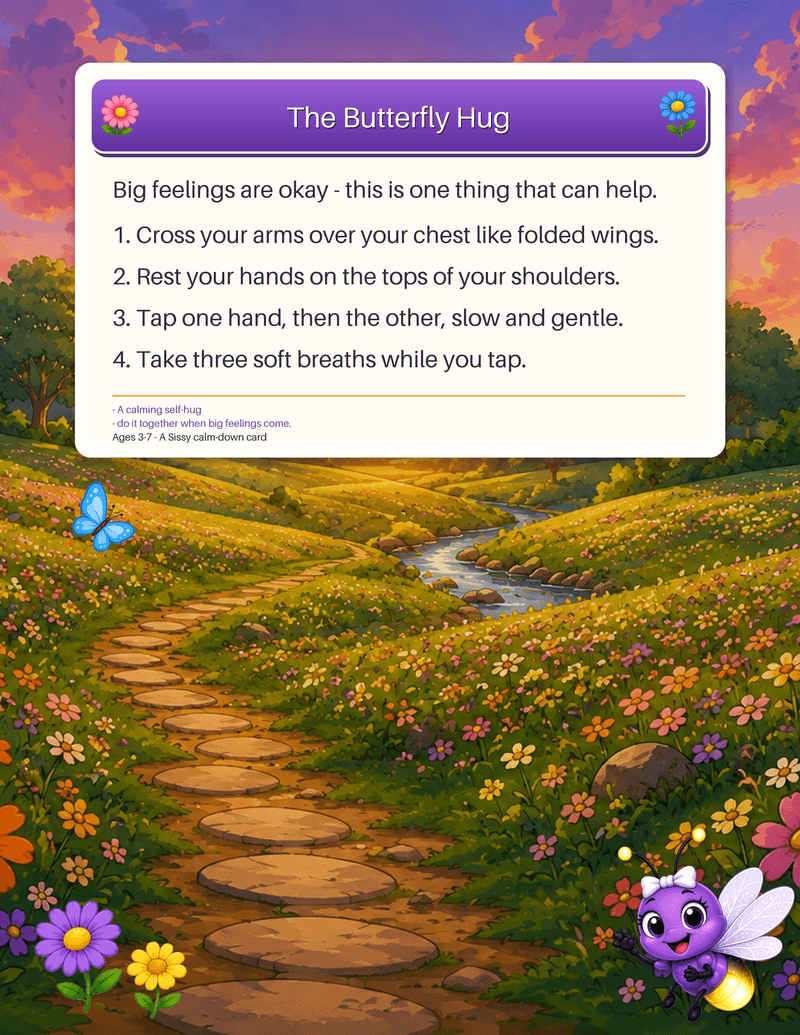
A social-emotional calm-down card teaching the butterfly hug - a gentle self-hug for big feelings.

Butterfly Hug Calm-Down Card

A gentle self-hug game to help settle big feelings.

Ages 3-7

Download (PDF)

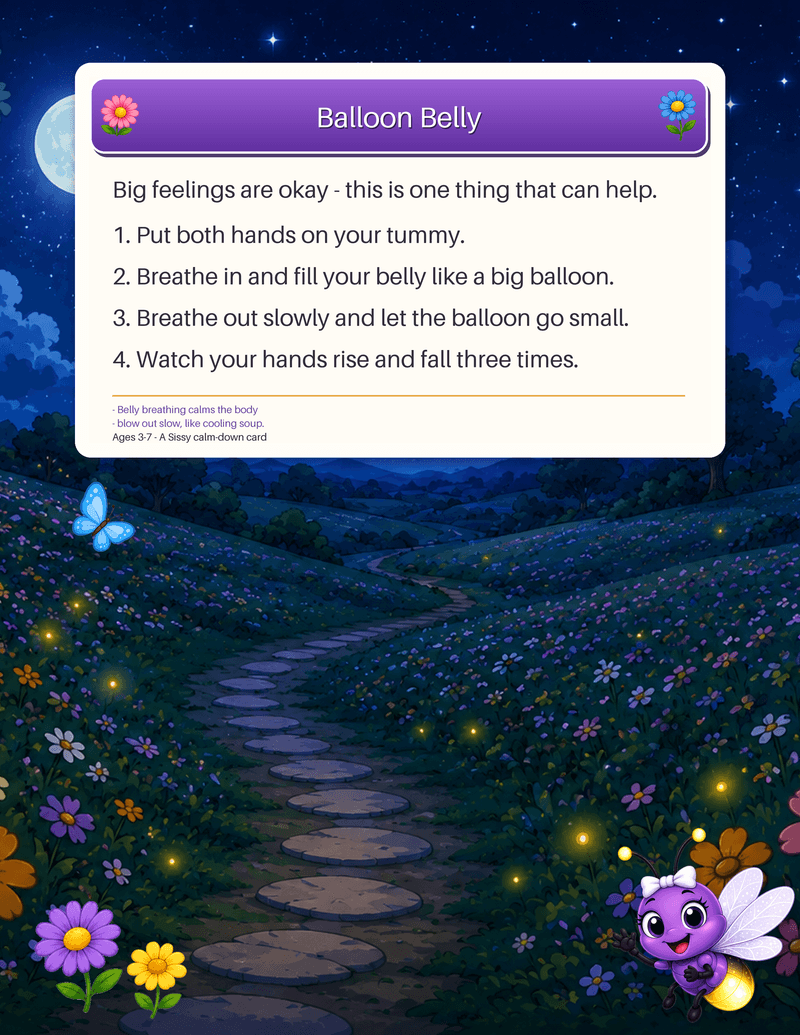
A social-emotional calm-down card teaching slow belly breathing - fill your tummy like a balloon.

Balloon Belly Calm-Down Card

A slow belly-breathing game for calming down.

Ages 3-7

Download (PDF)
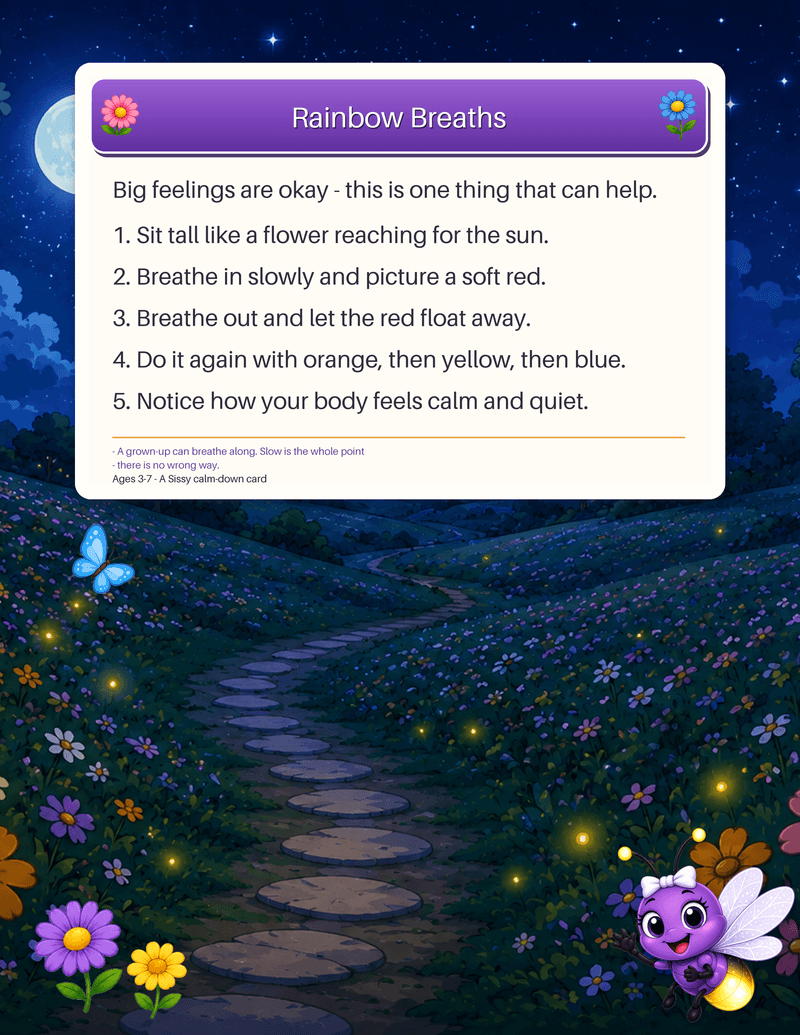
A social-emotional calm-down card with five gentle rainbow breathing steps for big feelings.

Rainbow Breaths Calm-Down Card

A gentle breathing game for big feelings - breathe a calm rainbow.

Ages 3-7

Download (PDF)
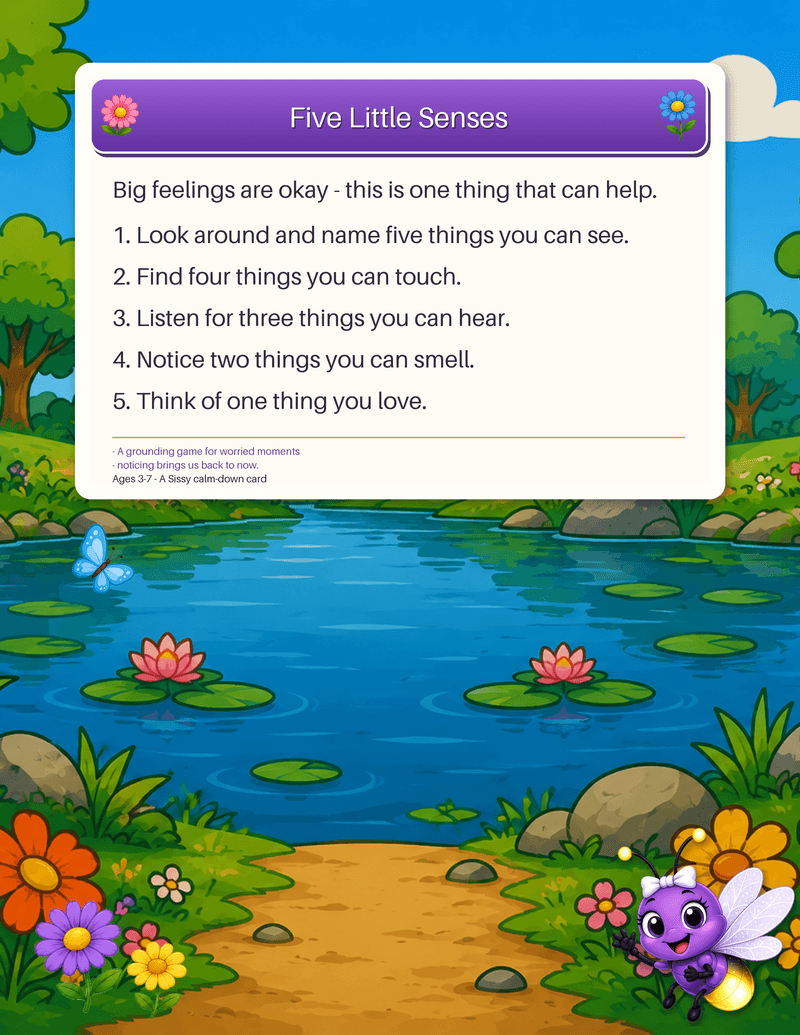
A social-emotional grounding card: notice five things you see, four you touch, and more.

Five Little Senses Calm-Down Card

A noticing game that brings worried minds back to now.

Ages 3-7

Download (PDF)
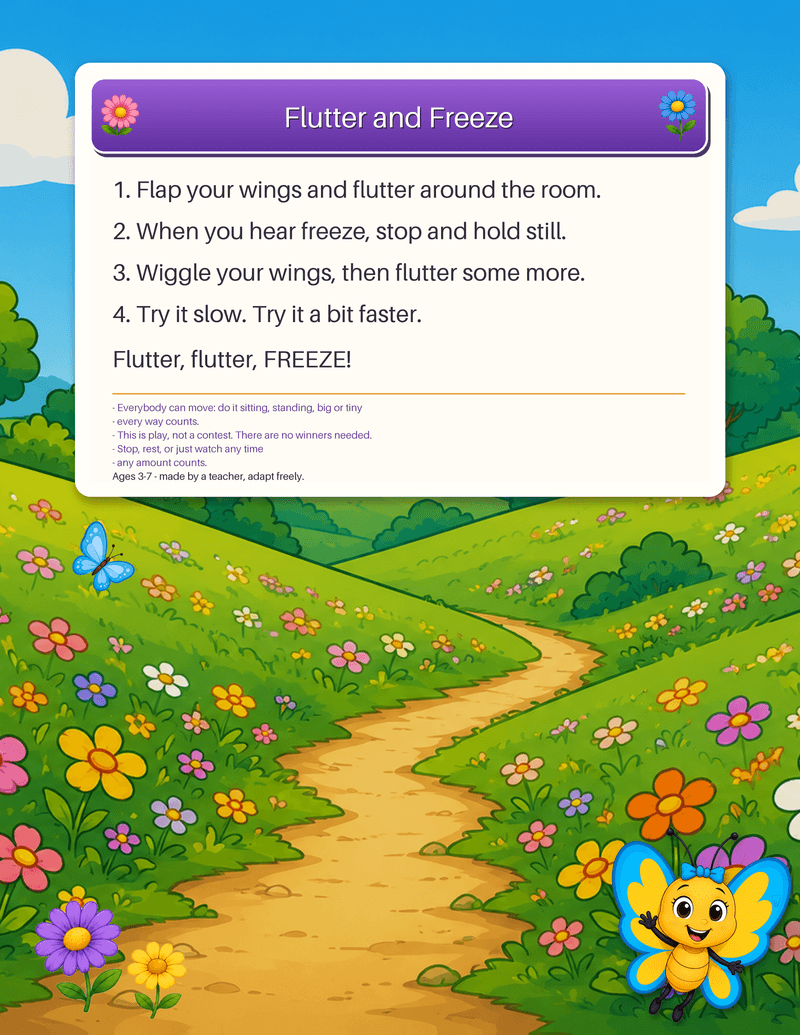
An active-play movement card: flutter like a butterfly, then freeze - inclusive, no competition, feet-on-the-floor.

Flutter and Freeze Movement Card

Flutter, then freeze - a wiggle game for indoors or out.

Ages 3-7

Download (PDF)

Find more in the full activities collection.

How to use them

  • Practice when it’s calm. Try a card together during a happy, quiet moment so it feels familiar before a meltdown — not for the first time in the storm.
  • Do it with them. Little ones borrow our calm. Take the slow breaths alongside your child rather than directing from across the room.
  • Name the feeling, then the tool. “You’re really frustrated. Let’s do a balloon belly together.” Naming it is half the calm.
  • Let them choose. Offer two cards and let your child pick — a small choice hands a little control back in an out-of-control moment.

Building a calm-down corner

A calm-down corner is simply a cozy, predictable spot where a child can go to reset — a pillow or soft chair, a comfort item or two, and a few of these cards at eye level. Keep it small and inviting.

One gentle rule: it is a place to feel better, never a place for punishment. When a calm-down corner is offered with warmth instead of used as a time-out, children learn to seek it out on their own — which is the whole goal.

Frequently asked questions

What are good calm-down activities for a preschooler?
Simple, body-based ones work best: slow "balloon belly" breathing, a self-hug with gentle taps (the butterfly hug), tracing a rainbow with a long breath, or naming five things you can see and hear. They give a young child something concrete to do while a big feeling passes.
How do I make a calm-down corner at home?
Pick a cozy, low-traffic spot with a pillow or soft chair. Add one or two comfort items and print a few calm-down cards to hang at your child’s eye level. Keep it small and calm — it is a place to reset, never a place for time-out or punishment.
At what age can children start learning to calm themselves?
Toddlers can follow along with a grown-up as young as 2-3, and by 4-5 many children can start using a favorite technique on their own. The key is practicing when everyone is already calm, so the tool is familiar before a hard moment arrives.
Do these calming activities really work?
Slow breathing and grounding genuinely help settle the body’s stress response — but they work best as a practiced habit, and with a calm grown-up nearby. Think of these cards as training wheels for self-regulation, not a magic off-switch.

A little butterfly learning to be brave

The butterfly on these cards is Sissy — a small character learning that big feelings are okay, and that courage is quiet. If the cards help, her picture book is a gentle read-aloud on the same theme whenever you’re ready.

Free printables in your inbox