Before a child can calm a big feeling, they have to know what it is. A three-year-old rarely thinks “I am frustrated” — they just feel a storm and act it out. The gift we can give is a word for the weather: happy, sad, mad, scared, proud, shy. Once a feeling has a name, it stops being a mystery that runs the show.

This guide is about that first step — naming feelings. It is the vocabulary side of social-emotional learning, and it pairs with our calm-down activities guide, which covers what to do once a feeling has a name. Name it here; settle it there. Everything below is free and teacher-created.

Feelings to name, one at a time

Happy and excited

The easy ones to start with. Ask what a happy body feels like — a bouncy tummy, a big smile — so a child learns that feelings live in the body, not just the face.

Sad

Sad is allowed. Naming it out loud — "you look sad that it is over" — tells a child the feeling is safe and seen. Naming is not fixing; it is company.

Mad and frustrated

The big, hot one. Little ones often act it out before they can say it. Giving it a word — "you are so frustrated" — is the first step to handling it instead of being swept away by it.

Scared and worried

Fear feels huge to a small person. Naming it gently, and noticing where it sits in the body, shrinks it to a size a child can look at — and that is exactly where courage starts.

Sheets for naming and talking about feelings

Feelings are easiest to name on someone else first. A read-aloud with a talk-about-it question, the meadow friends to color and describe, a courage poster, and a kindness song all give little ones a gentle way in.

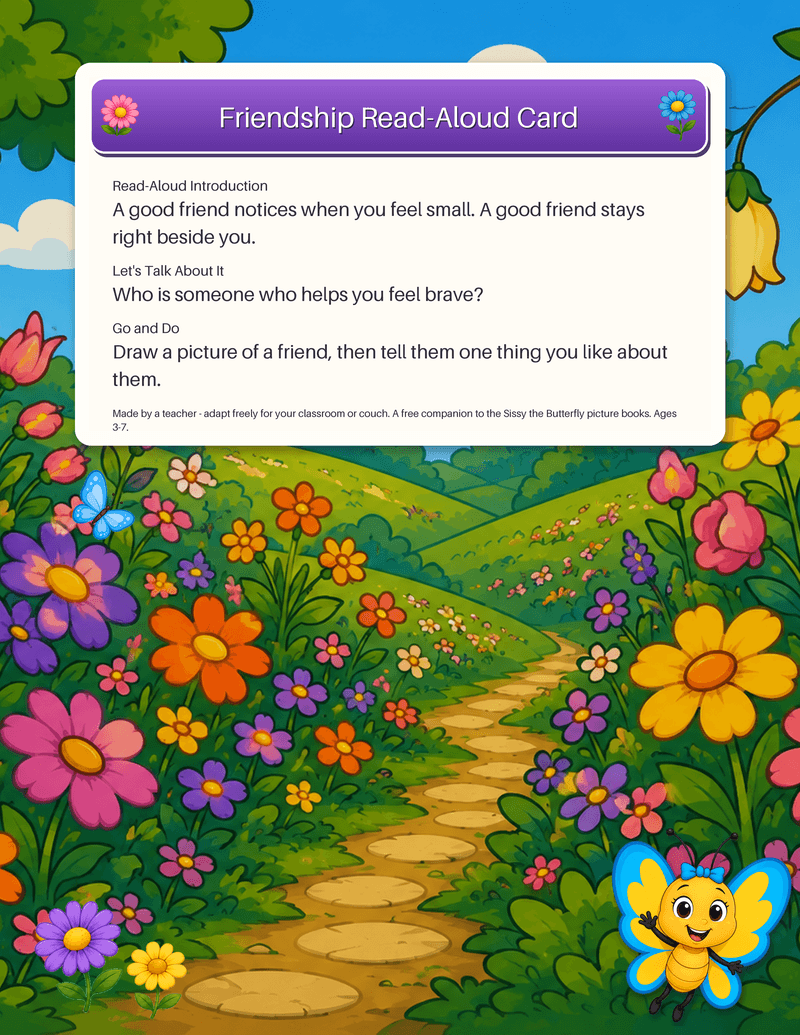
A one-page read-aloud companion about friendship: an introduction, a discussion question, and a go-do activity.

Friendship Read-Aloud Card

A free read-aloud about friendship: an introduction, a talk-about-it question, and a go-do.

Ages 3-7

Download (PDF)

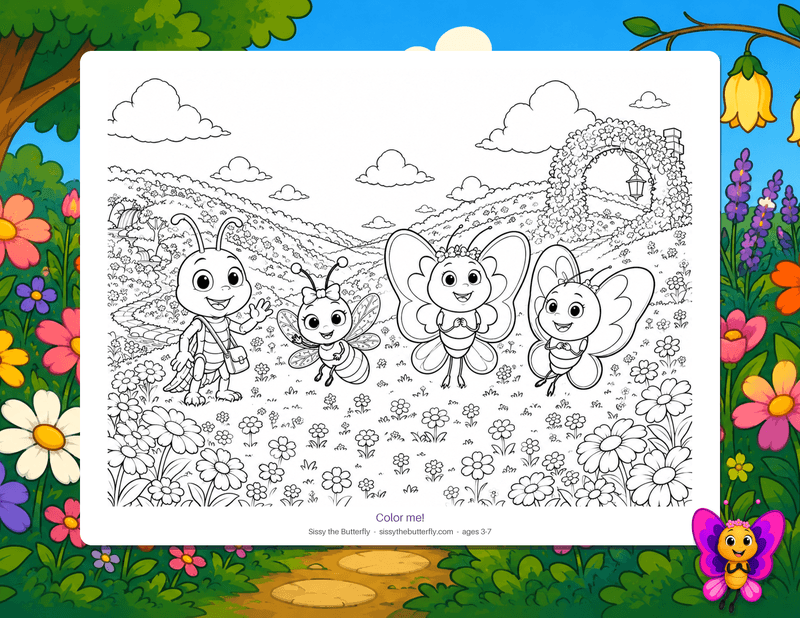
Sissy, Addy, Buddy, and Flitter together in a flower meadow with a flowered archway and clouds, drawn as bold outlines to color in.

Meadow Friends Coloring Page

Color Sissy and all her meadow friends in the flower field.

Ages 3-7

Download (PDF)
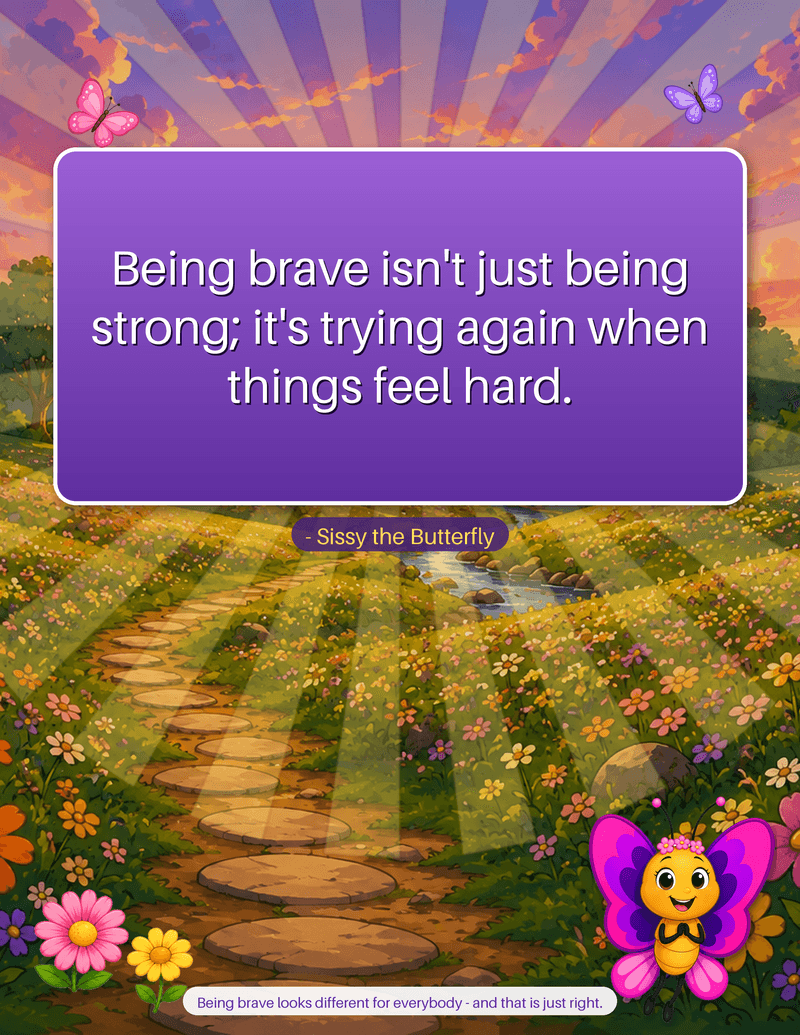
A printable poster with a gentle courage quote from Sissy the Butterfly for a child's wall.

Courage Quote Poster

A gentle courage quote for the bedroom wall or classroom.

Ages 3-7

Download (PDF)
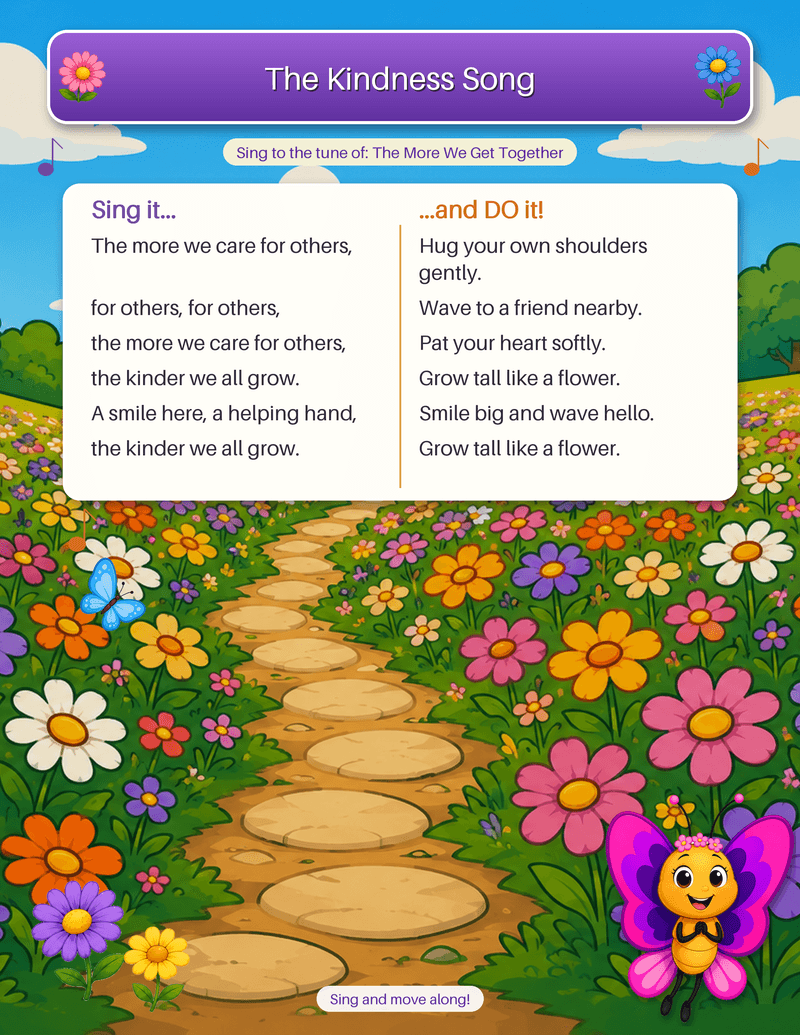
A sing-and-move lyric sheet set to The More We Get Together, teaching kindness, with an action for every line.

The Kindness Song Lyric & Action Sheet

New kindness words to a classic tune - with an action for every line.

Ages 3-7

Download (PDF)

More in the teaching guides collection and the coloring collection.

Once the feeling has a name

Naming is the first step; settling is the next. These few calm-down cards are a gentle bridge — for the full set of breathing and grounding tools, see our calm-down activities guide.
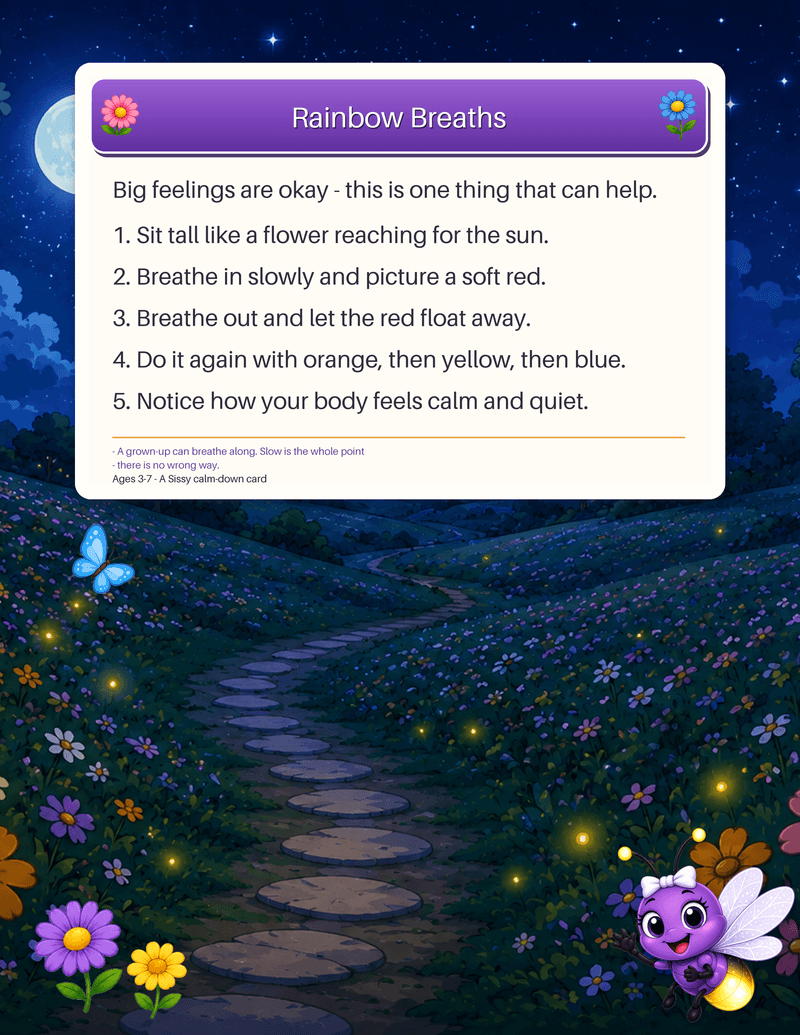
A social-emotional calm-down card with five gentle rainbow breathing steps for big feelings.

Rainbow Breaths Calm-Down Card

A gentle breathing game for big feelings - breathe a calm rainbow.

Ages 3-7

Download (PDF)
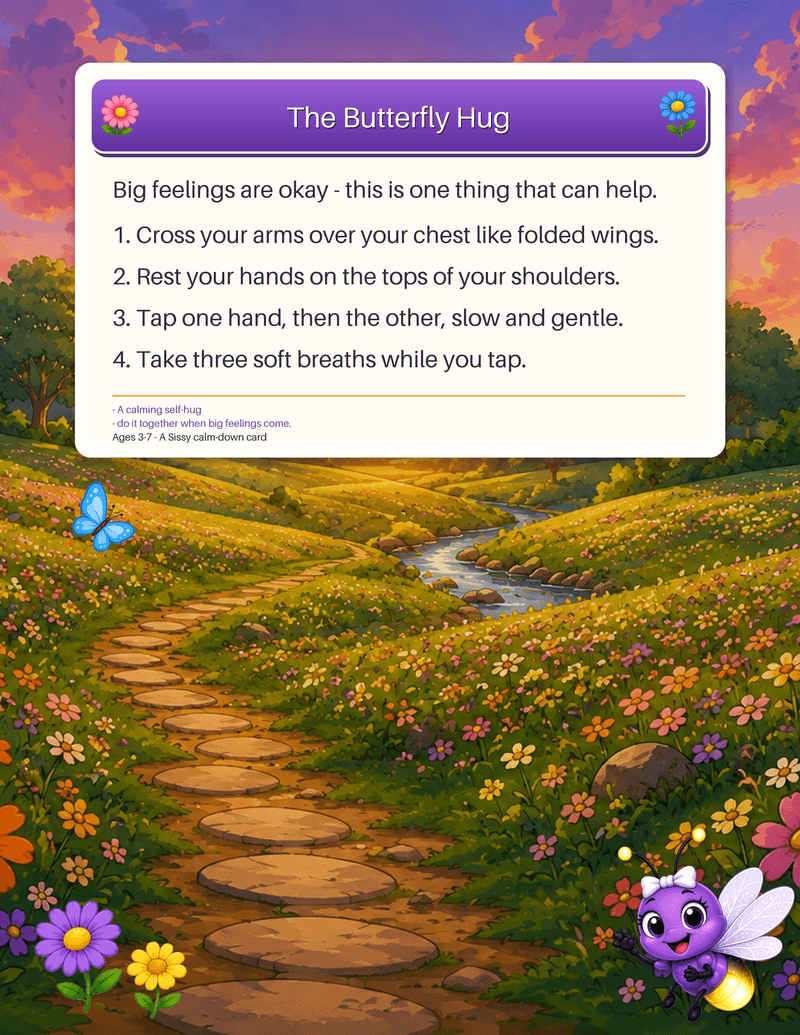
A social-emotional calm-down card teaching the butterfly hug - a gentle self-hug for big feelings.

Butterfly Hug Calm-Down Card

A gentle self-hug game to help settle big feelings.

Ages 3-7

Download (PDF)
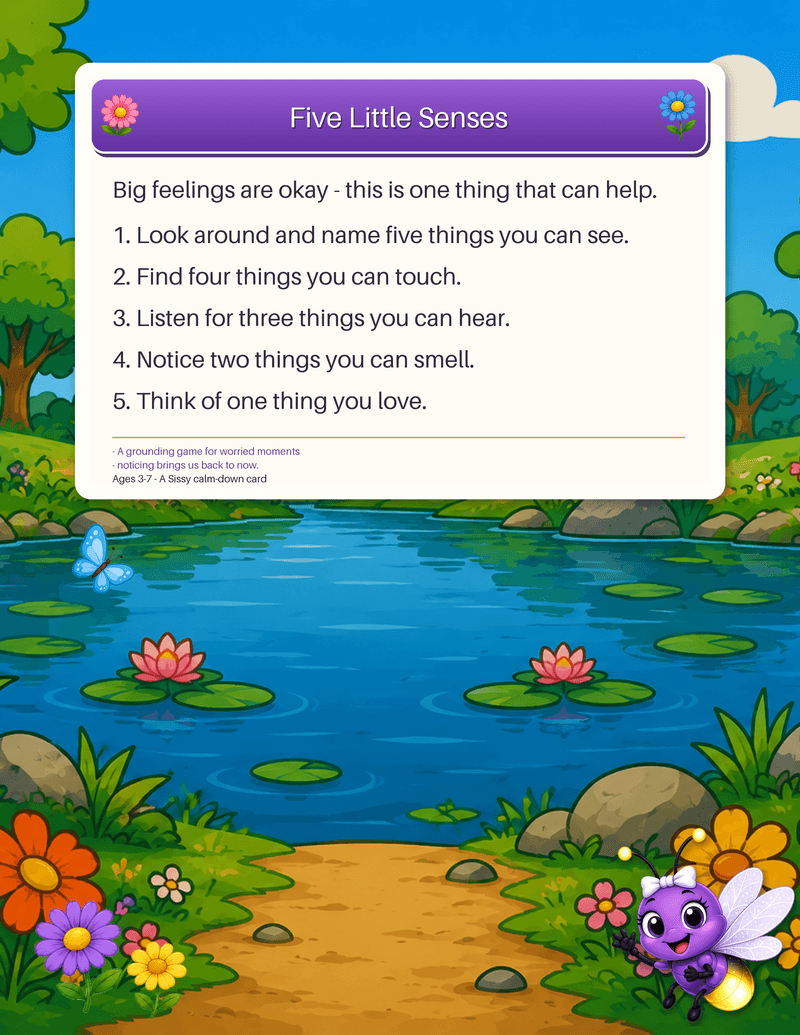
A social-emotional grounding card: notice five things you see, four you touch, and more.

Five Little Senses Calm-Down Card

A noticing game that brings worried minds back to now.

Ages 3-7

Download (PDF)

Ways to build feelings words

  • Narrate all day. “You’re disappointed the park is closed.” “I feel proud of you.” Children learn feelings words the same way they learn every other word — by hearing them, out loud, in real moments.
  • Name your own, too. Saying “I feel a little frustrated, so I’m taking a big breath” shows a child that grown-ups have feelings and words for them — and a plan.
  • Use the characters. “How do you think Sissy feels here?” is easier to answer than “how do you feel?” Practicing on a friend comes first.
  • Name it before you fix it. Resist jumping to the solution. Just “you’re really mad” — said and left to land — does more than any lecture. Being understood is often the whole remedy.

Frequently asked questions

How do I teach a preschooler to name their feelings?
Narrate feelings out loud all day, both theirs and yours — "you’re frustrated the tower fell," "I feel proud." Use simple words, point to where the feeling sits in the body, and lean on stories and characters so a child can practice on someone else before naming their own. Naming comes first; managing the feeling comes later.
What is the difference between naming feelings and calming down?
They are two steps of the same skill. Naming is putting a word to what is happening inside — "I feel mad." Calming down is what you do next to help the feeling pass. This guide is about the naming; our calm-down activities guide covers the settling tools, and the two work best together.
Why does naming feelings matter for young children?
A child who can say "I feel mad" is far less likely to hit, bite, or melt down, because the word gives the feeling somewhere to go besides the body. Researchers sometimes call this "name it to tame it." A rich feelings vocabulary in the early years supports friendships, focus, and self-control later on.
Are these feelings printables free?
Yes — every sheet here is a free, teacher-created PDF for ages 3 to 7. Print on regular letter-size paper, as many copies as your home or classroom needs.

A little butterfly learning to feel brave

Sissy is a small character learning that big feelings are okay, and that courage is quiet. If naming feelings sparks some good talks, her picture book is a gentle read-aloud on the very same theme whenever you’re ready.

Free printables in your inbox

Prefer them delivered? Our free newsletter sends new printables and gentle updates for grown-ups — never for children.