

Fine Motor Skills Activities for Preschoolers
Mazes, dot-to-dots, and cut-and-fold crafts that quietly strengthen little hands — free to print, for ages 3 to 7.
Long before a child can write their name, their hands are doing the groundwork — pinching, tracing, snipping, and gripping. Those small muscles are what a pencil will one day rely on, and the best way to build them is not drills but play a child actually wants to do.
The sheets below hide real hand-strengthening work inside a maze, a puzzle, and a craft. No child will notice they are practicing. All free, all teacher-created.
Pencil control and tracing
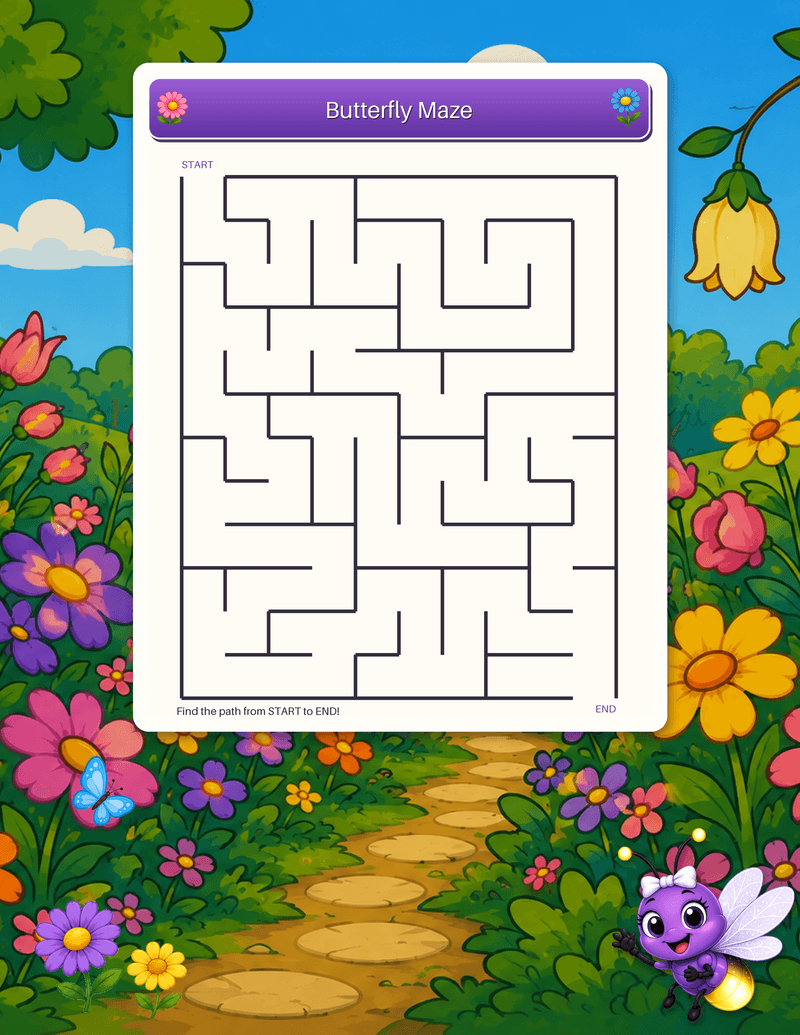
A maze to steer through, two dot-to-dots that end in a picture, and a matching sheet where a careful line is the whole game — gentle practice for the grip that writing needs.
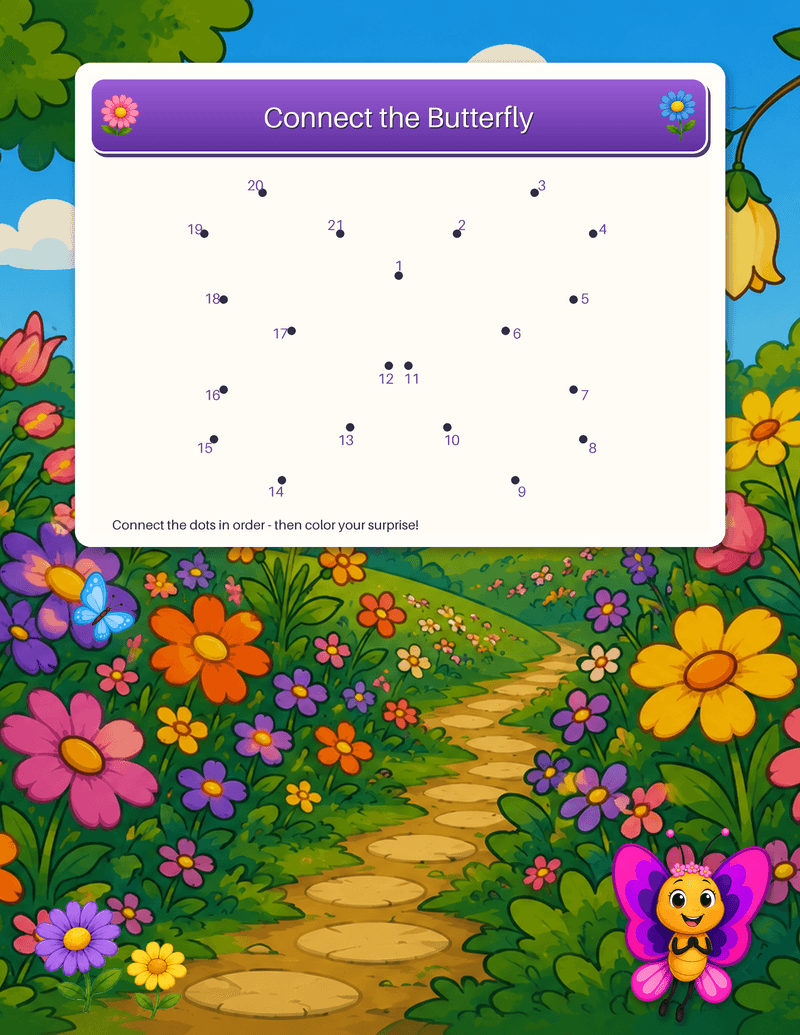
Butterfly Connect-the-Dots
Connect the dots in order to reveal a butterfly, then color it.
Ages 3-7
Download (PDF)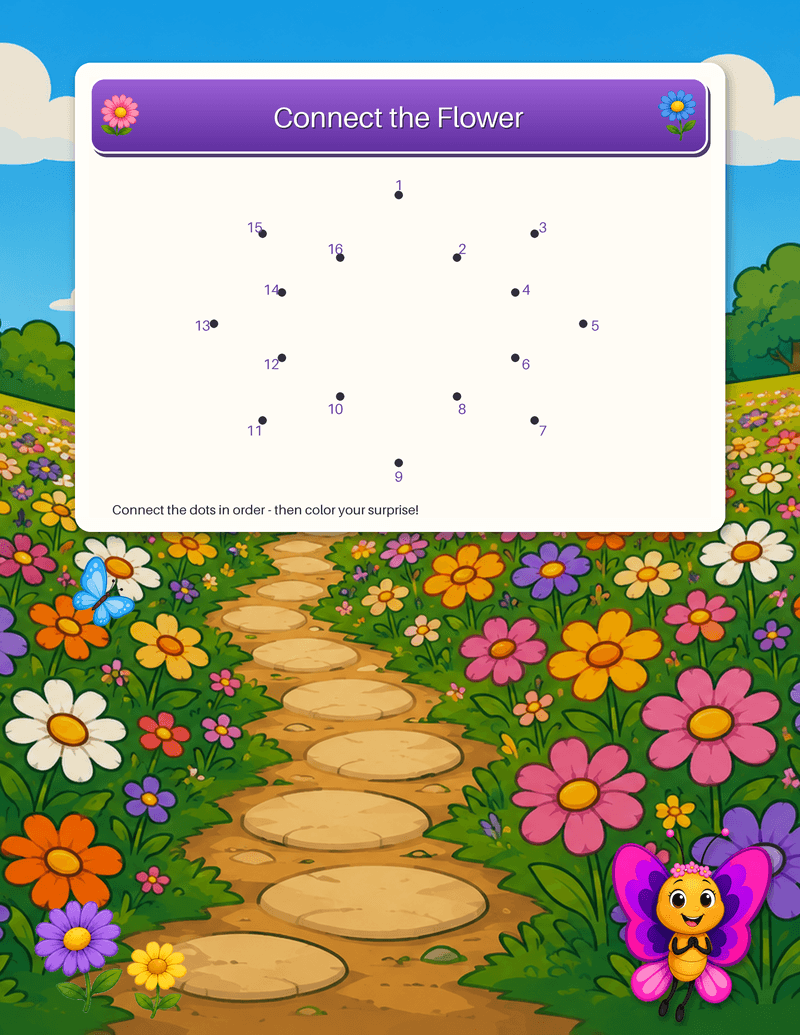
Flower Connect-the-Dots
Connect the dots in order to reveal a flower, then color it.
Ages 3-7
Download (PDF)
Scissor skills and cutting
Cutting is one of the best hand workouts there is. These two crafts give little scissors something to do — with a grown-up helper note and a safety line on every sheet.
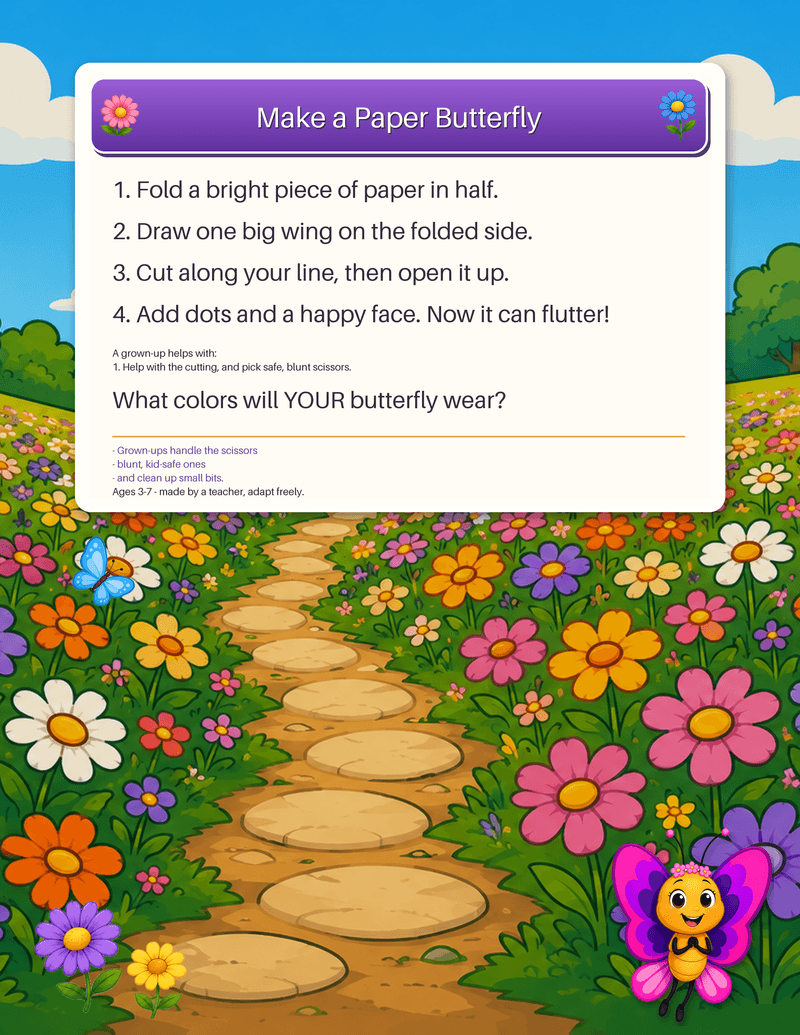
Make a Paper Butterfly
Fold, cut, and decorate a butterfly friend from one sheet of paper.
Ages 3-7
Download (PDF)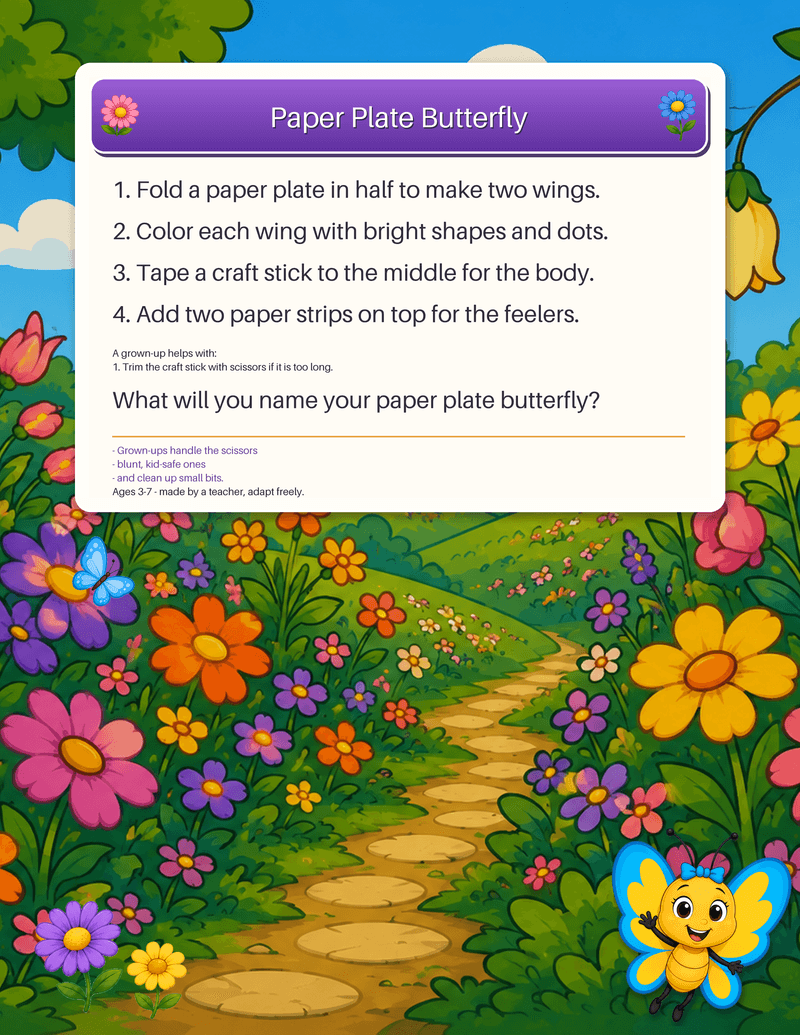
More in the full crafts collection.
Free drawing for busy fingers
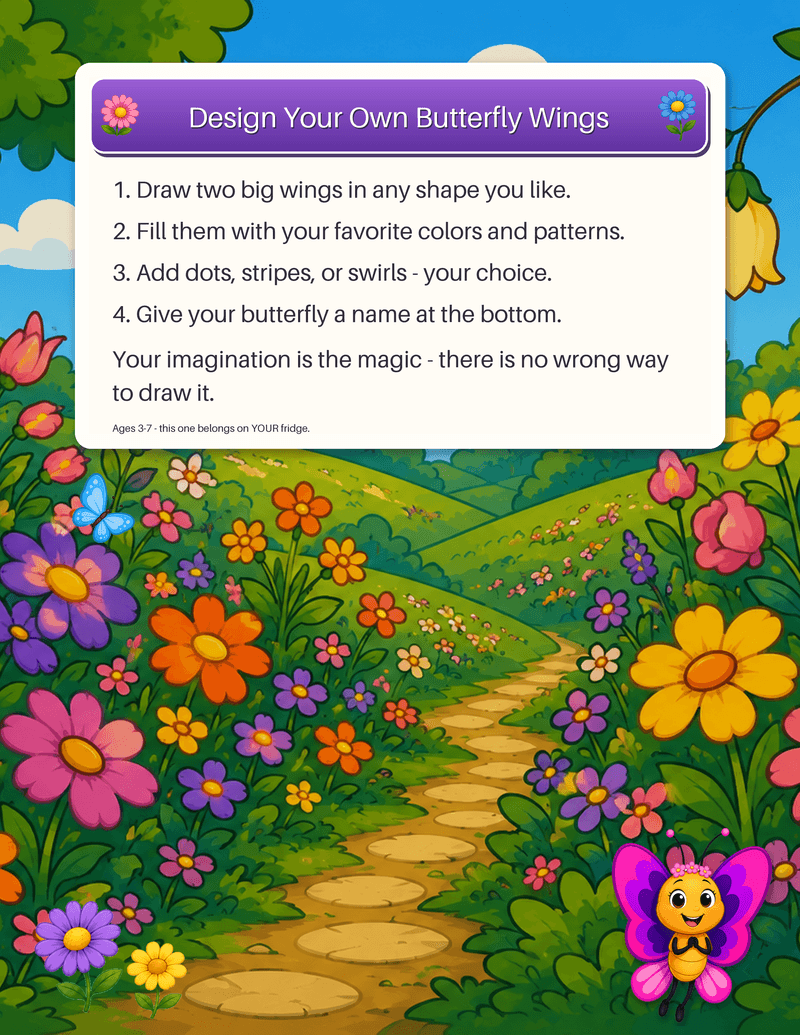
Open-ended drawing builds control just as well as tracing does — and a blank pair of wings invites a child to fill every inch.
Ways to build strong little hands
- Work up high. Tape a sheet to the wall or the fridge. Drawing on a vertical surface builds the wrist and shoulder strength a good pencil grip sits on top of.
- Keep it short. Five focused minutes beats a whole worksheet. Little hands tire quickly, and a tired hand practices a worse grip, not a better one.
- Let them cut real things. Snipping a straw into beads or a card into confetti is scissor practice in disguise, and far more tempting than a dotted line.
- Praise the effort, not the neatness. A wobbly line drawn with focus is worth more than a tidy one traced with a sigh. The trying is the muscle.
Questions grown-ups ask
- What are fine motor skills, and why do they matter?
- Fine motor skills are the small, precise movements of the hands and fingers — holding a crayon, using scissors, doing up a button. They are the foundation writing is built on, which is why so much of preschool is quietly about strengthening little hands.
- What age should fine motor practice start?
- It is already happening from toddlerhood, long before a child holds a pencil properly. Around ages 3 to 5 is a lovely window for the sheets here — mazes, dot-to-dots, and cutting — but there is no race. A relaxed hand learns faster than a rushed one.
- My child grips the crayon in a fist. Is that a problem?
- Not at this age. A fist grip is a normal early stage, and it changes on its own as the hand grows stronger. Short bursts of drawing, cutting, and threading do more to help than any correction. Try a broken crayon or a golf pencil — a small tool nudges small fingers into place.
- Are these fine motor printables free?
- Yes — every sheet here is a free, teacher-created PDF. Print on regular letter-size paper. For the cutting crafts, a pair of safety scissors and a grown-up nearby is all you need.
The sheets come from a story
Every maze and butterfly here is drawn from the world of a picture book about a little butterfly learning to be brave. Sissy’s story is a gentle read-aloud whenever you’re ready.
Free printables in your inbox
Prefer them delivered? Our free newsletter sends new printables and gentle updates for grown-ups — never for children.