
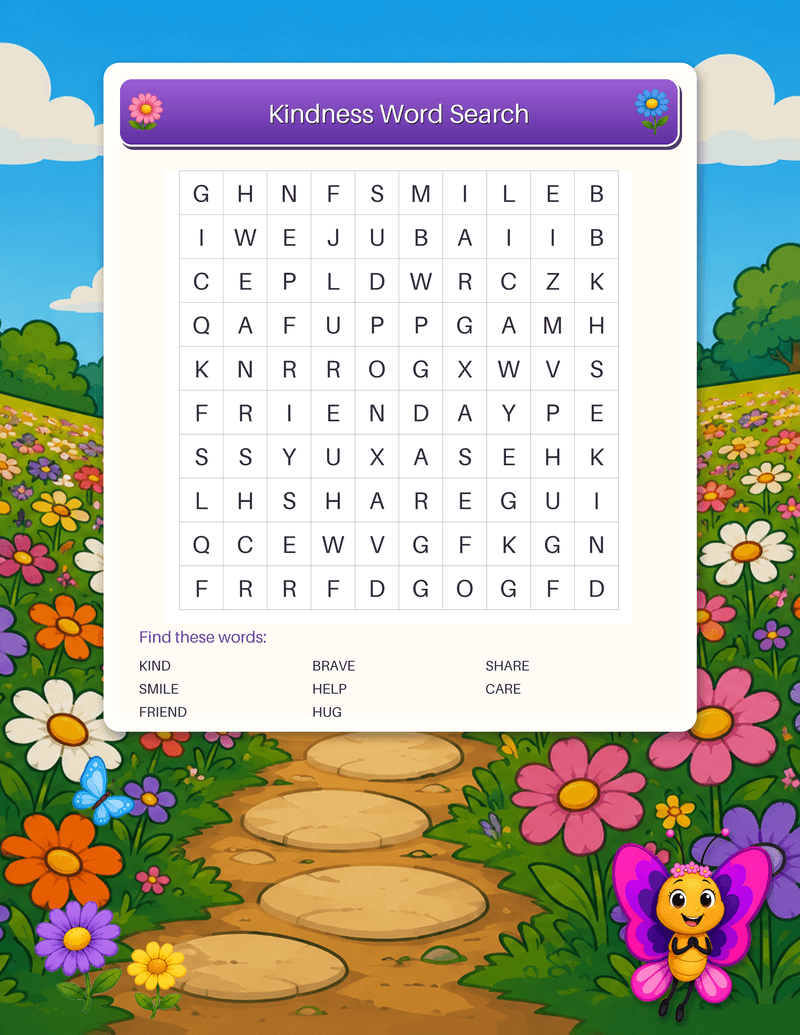

Kindness Activities for Kids
A word search, a song, and a few good questions — gentle ways to talk about being kind, free to print for ages 3 to 7.
Kindness is hard to teach and easy to notice. Children rarely learn it from being told to be kind; they learn it from hearing it named when it happens — you shared without being asked — and from stories where someone chooses it when choosing was difficult.
The sheets below are small openings for that: something to do with your hands, and a question worth asking afterwards. All free, all teacher-created.
Free printable kindness activities
A word search of kind words for early readers, and a song with an action for every line.
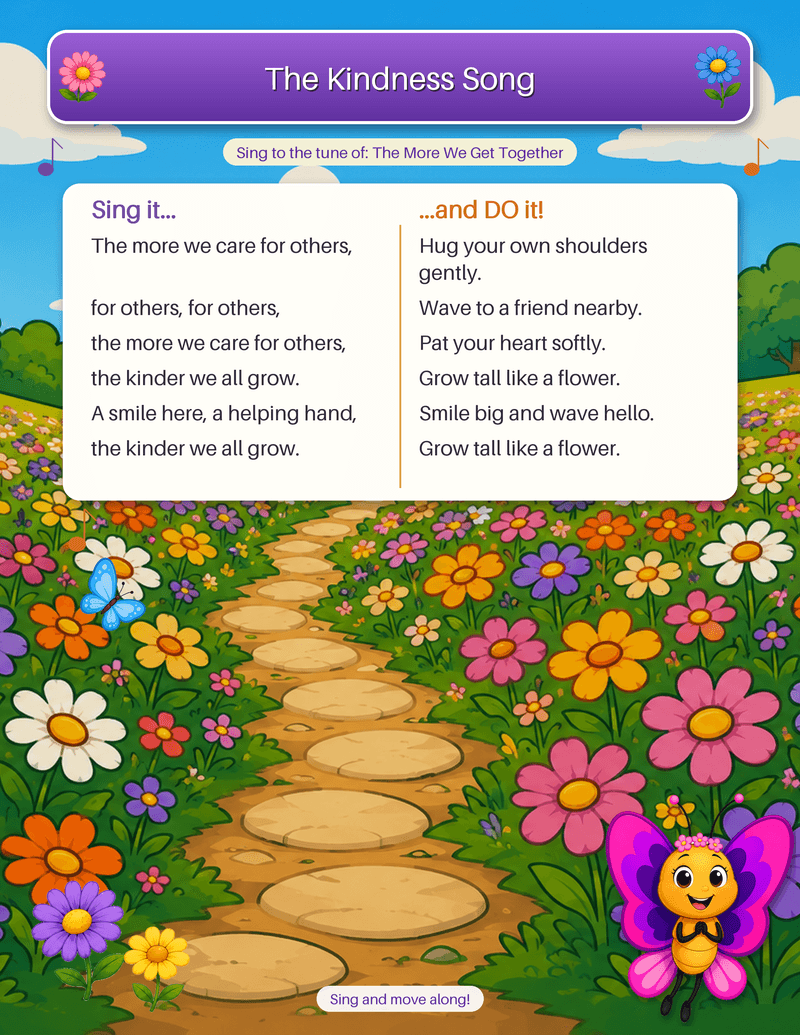
The Kindness Song Lyric & Action Sheet
New kindness words to a classic tune - with an action for every line.
Ages 3-7
Download (PDF)Read-aloud cards
For the few minutes after a story — an introduction, one question worth asking, and one small thing to go and do.
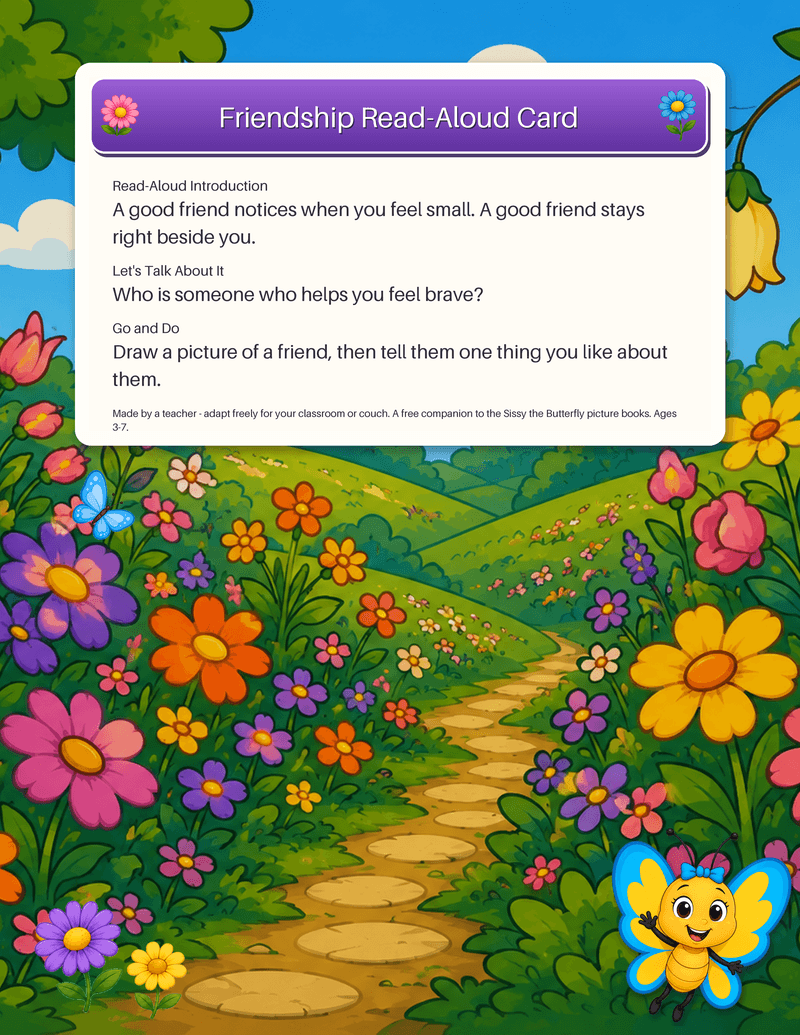
Friendship Read-Aloud Card
A free read-aloud about friendship: an introduction, a talk-about-it question, and a go-do.
Ages 3-7
Download (PDF)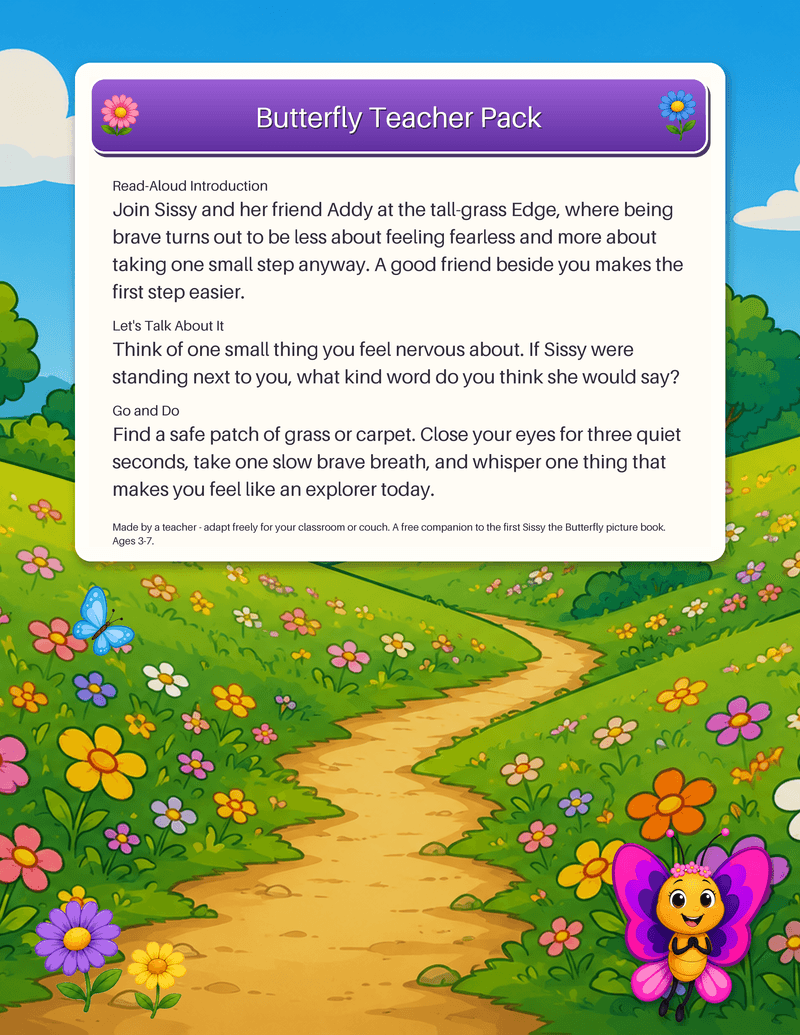
Butterfly Teacher Pack (Book 1 Companion)
A free read-aloud companion for Book 1: an introduction, a talk-about-it question, and a go-do.
Ages 3-7
Download (PDF)More in the full teaching guides collection.
Talking about kindness
- Name it when you see it. Describe what they actually did rather than labelling them — “you waited so she could go first” lands better than “good boy.” The description is the part they can repeat tomorrow.
- Ask about the character, not the child. “Why do you think she did that?” is a question a four-year-old will answer honestly. “Would you have been kind?” usually just gets the answer they think you want.
- Let the hard version count. Kindness that costs something — sharing the good one, waiting when you did not want to — is worth noticing out loud precisely because it was hard.
- Keep it short. One question after a story beats a conversation about values. They are still thinking about it long after they have stopped talking.
Questions grown-ups ask
- How do you teach kindness to a young child?
- Mostly by noticing it out loud. A three-year-old learns what kindness is from hearing it named — "you waited for her, that was kind" — far more than from being told to be kind. The activities here give you something to do together, and the naming happens naturally alongside it.
- What age are these kindness activities for?
- Roughly ages 3 to 7. The read-aloud cards and the song work from about three; the word search suits early readers, around five to seven. A younger child can hunt for letters while a grown-up reads the words aloud.
- What is a read-aloud card?
- A single sheet with three things: a short introduction, one talk-about-it question, and one small go-do. It is designed for the few minutes after a story, when a child is still in the world of the book and most ready to talk about it.
- Are these kindness printables free?
- Yes — every sheet here is a free, teacher-created PDF. Print on regular letter-size paper. The read-aloud cards are made for grown-ups to hold, so one copy is plenty.
The kind words come from a story
Sissy is a little butterfly learning to be brave, and her friends are the ones who make being brave possible. Her picture book is a gentle read-aloud whenever you’re ready.