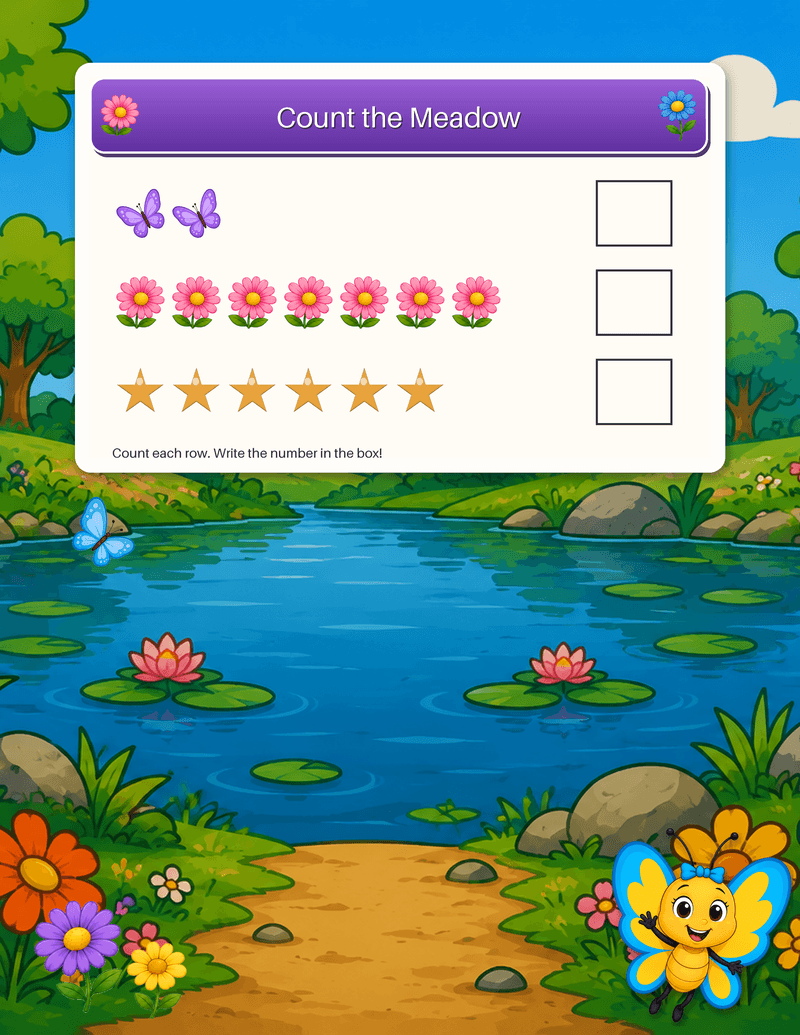
Counting starts long before a child can write a number. It starts with pointing — one butterfly, then another, then another — and slowly noticing that the last word you said is how many there were. That quiet realisation is the whole foundation of early maths.

The sheets below give that practice something to count that a child actually cares about: the butterflies, flowers, and stars of Sissy’s meadow. All free, all teacher-created.

Free printable counting worksheet

Count what you find in the meadow, then write the number beside it.

A counting worksheet with rows of butterflies, flowers, and stars to count and write.

Count the Meadow Counting Sheet

Count the butterflies, flowers, and stars, then write the number.

Ages 3-6

Download (PDF)

Number order, hidden in a picture

Dot-to-dots are number practice in disguise — follow the numbers in order and a butterfly or a flower appears, ready to colour.
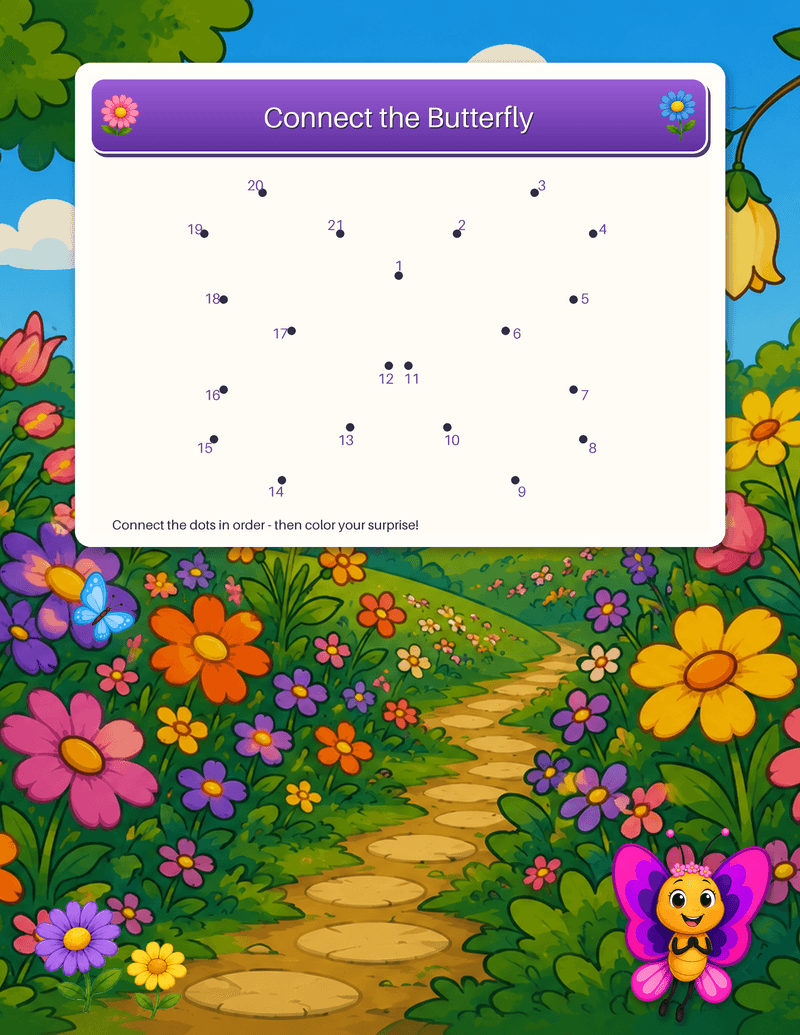
A connect-the-dots puzzle: numbered dots that draw a butterfly outline to color.

Butterfly Connect-the-Dots

Connect the dots in order to reveal a butterfly, then color it.

Ages 3-7

Download (PDF)
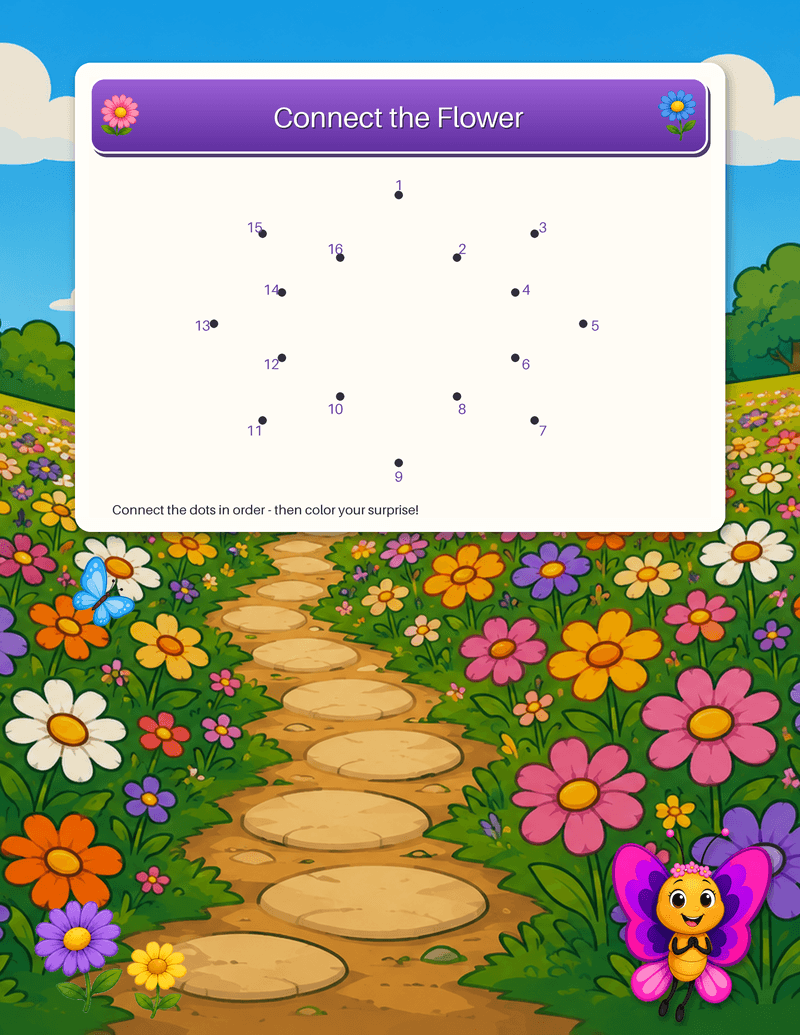
A connect-the-dots puzzle: numbered dots that draw a flower outline to color.

Flower Connect-the-Dots

Connect the dots in order to reveal a flower, then color it.

Ages 3-7

Download (PDF)

More in the full puzzles collection.

Tips for counting together

  • Touch every one. Have them put a finger on each butterfly as they say the number. Touching is what turns the counting song into real counting.
  • Ask “how many?” at the end. If they recount the whole row to answer, that is normal — the idea that the last number is the total takes a while to land. Ask again next week.
  • Count things that are not on paper. Steps to the door, apples in the bowl, birds on the wire. The sheet is practice; the world is where it sticks.
  • Let a wrong answer stand for a moment. Recount together rather than correcting. “Let’s check” keeps them trying; “no” ends the game.

Questions grown-ups ask

What age should a child start counting worksheets?
Around ages 3 to 6, though it varies enormously and that is completely normal. A three-year-old may count aloud while pointing at random; a five-year-old usually matches one number to one object. Both are real progress — the first is the rehearsal for the second.
My child counts to ten but miscounts five objects. Why?
Reciting numbers and counting things are two different skills. Saying "one two three" is a song; touching each butterfly exactly once while saying it is the harder job underneath. Counting slowly and touching each picture as you go is what joins them up.
How do dot-to-dots help with numbers?
A dot-to-dot hides number order inside a drawing. To get a butterfly at the end, a child has to find what comes after seven — and they will happily hunt for it, because there is a picture waiting. It is number order without a single flashcard.
Are these counting sheets free to print?
Yes — every sheet here is a free, teacher-created PDF. Print on regular letter-size paper. A crayon works better than a pencil for little hands.

The meadow comes from a story

The butterflies being counted here live in a picture book about a little butterfly learning to be brave. Sissy’s story is a gentle read-aloud whenever you’re ready.

Free printables in your inbox